Skip to content
אΩLingua Deo Gloria

About the ministry

Languages for the Church, to the glory of God

Lingua Deo Gloria exists to serve the church of Jesus Christ. Learning the biblical languages is imperative for a proper interpretation of the Word of God. Deep love for the glory of God and the advancement of the gospel of Christ is central to our labors. Therefore, we teach free live Hebrew and Greek courses and produce free resources for the benefit of the global Church.

What our name means

Our name in Latin has two subjects — Lingua and Gloria — unlike the famous Reformation phrase Soli Deo Gloria, which has only one. These two subjects are the central focuses of our mission: to teach languages to the church, for the glory of God.

How we teach, and why

Our philosophy of teaching

Why the biblical languages? The Scriptures, containing the Hebrew Bible and the Greek New Testament, reveal the glory of the immortal God. There is no other way to know God in a saving relationship than to know him through Christ Jesus, as we learn about him in the Scriptures. Because of this, it is imperative that Christians continue to study the original languages, so that the Church may be taught the incomparable riches of Christ according to the authors' intent.

Since studying the original languages is ultimately an access point to studying the Scriptures, we take this task seriously. Teaching Hebrew and Greek is important — and therefore, by necessity, how we teach those languages is also important. If these wonderful languages are taught in a needlessly difficult way, the result is exhaustion, confusion, and disappointment. As Christians who value honoring God in our labors, we have learned from the field of Second Language Acquisition — particularly the theory of Comprehensible Input — and from the power of pictures and stories to give students joy in the learning process.

The team

The people behind the work

Teachers and scholars who love the languages — and love the Church more.

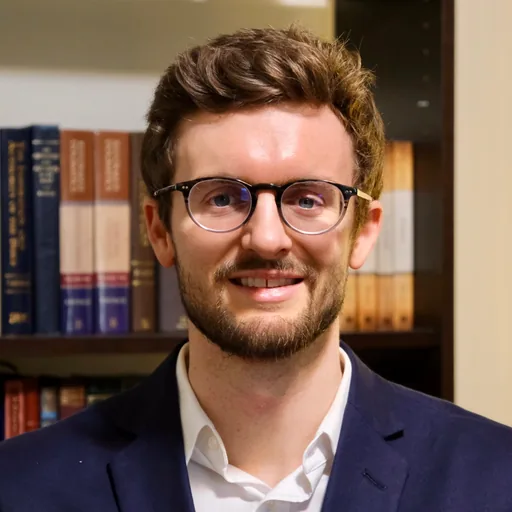
Sawyer D. Moranville

Sawyer D. Moranville

Founder

Sawyer was raised in Montana. He began studying Koine Greek, Classical Hebrew, and Classical Latin at Southern Seminary in Louisville, Kentucky, which eventually led to an M.Div. After graduating, he moved to Jerusalem with his wife to study more Hebrew (where their first child was also born). His studies in Israel led to a Master's degree in Classical Hebrew through the Institute for Biblical Languages and Translation (Whole Word Institute).

A mountain lover, husband, father, and Biblical Hebrew teacher, he now lives with his family in the greater Philadelphia area and serves as director of Youth Education at Graterford Bible Fellowship Church. When he is not working or spending time with his family and church, he is probably learning piano — or gardening, when the weather is good.
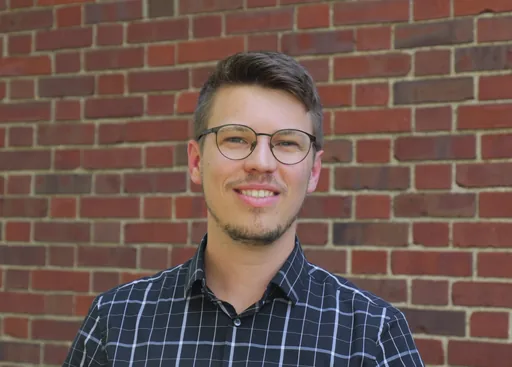
Benjamin Eisenberg

Benjamin Eisenberg

Biblical Hebrew instructor

Ben grew up in the United States and later moved to Israel, where he became fluent in Modern Hebrew. Intrigued by Biblical Hebrew, he studied Linguistics and Hebrew Language at the Hebrew University of Jerusalem (B.A. and M.A.). His M.A. thesis, A Cognitive and Construction Grammar Approach to the Biblical Hebrew Adjective: A Study in Prototypicality and Gradience, was prepared under the guidance of Dr. Adina Moshavi. At Hebrew University he was also a teaching assistant in Biblical Hebrew and taught a bibliographical guidance course. He spent nearly three years with Whole Word Institute (formerly the Institute for Biblical Languages and Translation), gaining hands-on experience teaching Biblical Hebrew through a communicative, immersive approach, and has worked with Biblingo and the Tsur Institute for Biblical Research in supporting roles.

Passionate about linguistics, second-language acquisition, and the Bible, Ben is committed to making the biblical languages engaging and accessible for modern learners globally. He is currently pursuing biblical and theological studies at Reformed Theological Seminary in Charlotte, North Carolina. In his free time he enjoys hiking, board games, and exploring new places with friends and family.

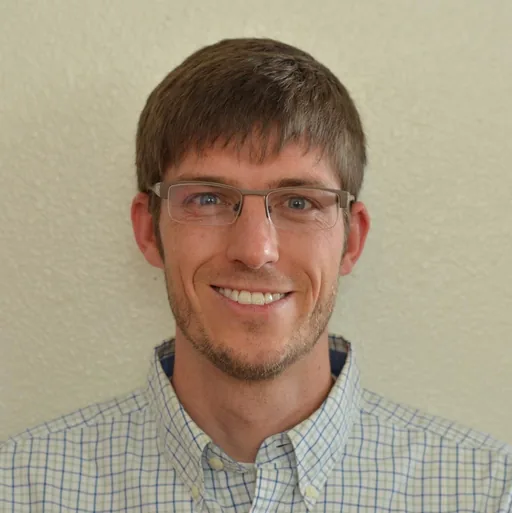
Scott McQuinn

Scott McQuinn

Hebrew & Greek instructor

Scott is married to Vanessa McQuinn, and together they have eight children. He is passionate about equipping God's people to build the Kingdom of God on earth as it is in heaven, primarily through biblical language training. Scott began studying Hebrew and Greek in undergrad in 2005, but was first "awakened" to the Communicative Language Teaching (CLT) approach in seminary, when he and his wife attended Biblical Language Center's six-week Hebrew immersion course in Israel in 2011. He has been pursuing further training in this field — and every teaching opportunity he can find — ever since.

He holds a B.A. in Biblical Languages, an M.Div. in Biblical Exegesis, an M.A. in Ancient Language Acquisition, and a Th.M. in Old Testament/Septuagint. His M.A. thesis, Towards a Principled Communicative Methodology for Teaching the Biblical Languages, has helped many biblical language instructors teach more effectively. He has worked with BLC/Whole Word Institute since 2014 — teaching both Hebrew and Greek, helping develop their online Hebrew curriculum, and co-authoring (with Benjamin Kantor) their more recent Greek curriculum. He has also taught for multiple seminaries, universities, Bible translation organizations, and churches, including two trips overseas to train Bible translators. He is excited to bring his experience to Lingua Deo Gloria!

The best way to know us is to learn with us.